The sport had moved on without him, as sports always did. New champions rose while old ones faded into memory or minimum wage obscurity. But the fighter never left. Tyler’s mistake.
Martin studied Tyler like he’d studied opponents for 23 years. Reading tells, cataloging weaknesses, building strategy. Tyler was talented but unrefined, strong but predictable, confident but careless. His jabs telegraphed from downtown, shoulder dipping before every throw.
His footwork was textbook but rigid, no improvisation under pressure. He relied on power over precision, intimidation over technique. The kid threw punches from too far away, telegraphed intentions with obvious shoulder movement, depended on size and youth instead of skill. Classic amateur mistakes that would get him hurt against real competition.
Against untrained opponents, these flaws didn’t matter. Against someone with Martin’s experience, they were neon signs screaming amateur. The psychology. Tyler saw an elderly Black janitor and assumed weakness.
Classic mistake. He’d built his confidence on beating lesser opponents, never facing someone who’d survived real wars. Martin understood the psychology perfectly. Young men needed to establish dominance.
Picking on apparent defensiveness was easiest path to perceive strength. But Tyler had no idea he was tormenting someone who’d once shared rings with legends. Someone whose name belonged in boxing history books. Someone who’d learned to channel violence into art through decades of professional combat.
The irony was suffocating. Tyler was performing for audiences who had no idea they were watching a master being disrespected by a student who didn’t even know school was in session. The preparation. The 30-minute delay gave Martin time to access dormant parts of himself.
His breathing shifted into pre-fight rhythm. Slow, deep, centering, the pattern that had carried him through championship battles. His mind began familiar opponent analysis. Tyler’s preferred combinations, jab, cross, hook.
His range exactly 74 inches. His timing rushed when angry, sloppy when showing off. every habit, every weakness, every opportunity for exploitation. Martin’s strategic brain, dormant for 3 years, roared back to life. He cataloged Tyler’s tells like a computer processing data.
The shoulder twitch before jabs. The weight shift before hooks. The ego that made him predictable under pressure. The awakening.
As Martin worked, his body unconsciously shifted into old patterns. stance while mopping became balanced base he’d used against Morrison. Breathing followed controlled rhythm that had sustained him through 12 round wars. His eyes tracked fighter movement with predatory awareness of someone who’d made living reading opponents intentions. Where others saw random training, Martin saw telegraphed techniques and exposed defenses.
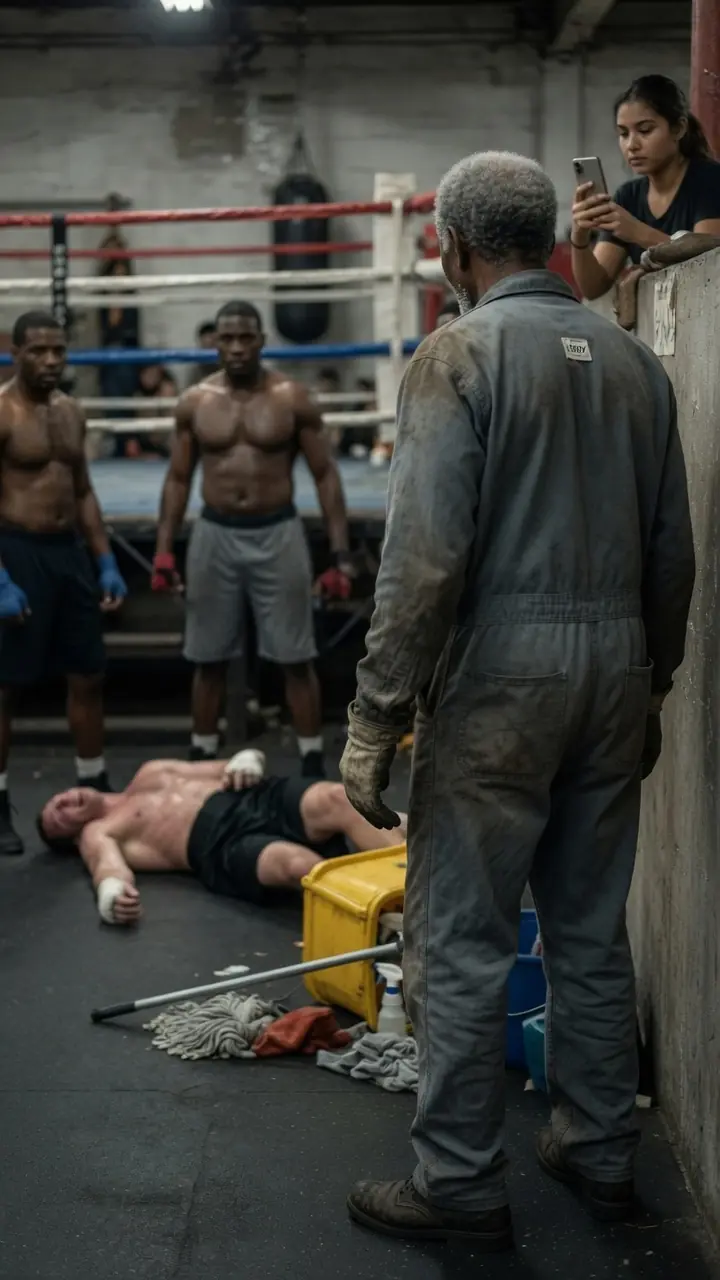
Eddie Thompson noticed these changes because he’d witnessed them before in fighters preparing for battle. The way Martin’s shoulders squared when he thought nobody watched. The precision of footwork as he navigated equipment. The controlled aggression that spoke of decades channeling violence into art.








