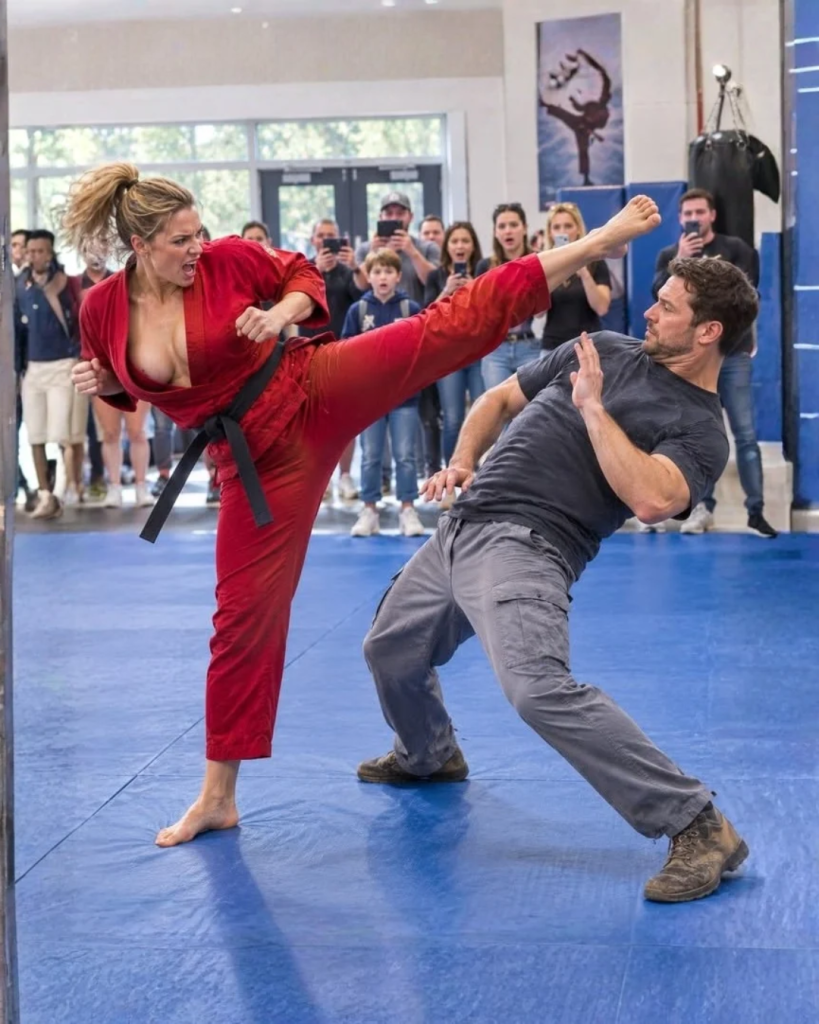
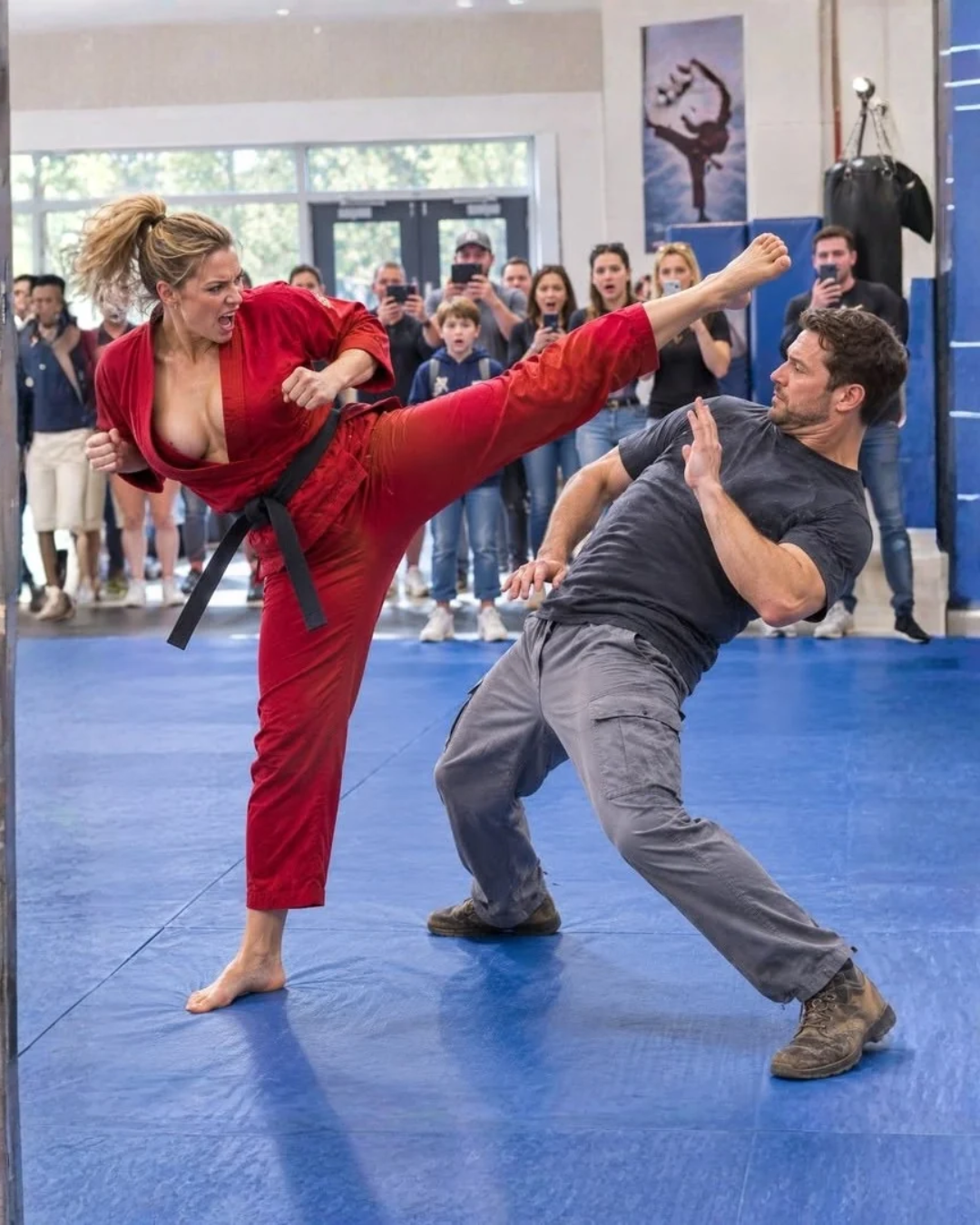
THE THIRTY-SECOND CHALLENGE
She Challenged the Quiet Single Father in Front of Fifty People. The Clock Was Supposed to Humiliate Him. Instead, It Exposed a Secret Nobody in the Gym Was Ready to Hear.
Chapter One: The Five Warnings
The first thing the internet saw was my hand on Vanessa Carter’s wrist.
It didn’t see her step toward me after I’d asked her to stop. It didn’t hear me say no five times. It didn’t show my eleven-year-old son sitting against the wall, his fingers pressed so tightly around his backpack straps that his knuckles had turned white.
The video began with me standing above a Brazilian jiu-jitsu black belt in the middle of a crowded gym. It ended with her on one knee and the sound of teenagers gasping.
By dinner, half the town thought I had attacked a woman at a youth center.
By midnight, a major donor was asking for my resignation.
And by the following Monday, I would discover that the thirty-second challenge had never been only about me.
But that Saturday, with fifty people watching and a clock above the gym doors, I didn’t know any of that.
I only knew that Vanessa was standing too close.
“Thirty seconds,” she said. “That’s all I need.”
I looked toward the clock, then carefully unfastened the worn silver watch from my left wrist. I placed it beside my clipboard on the chair.
It had belonged to my wife, Rachel. She’d bought it for me during the last summer before her diagnosis, when I still thought I could plan my life in seasons and training schedules and vacations that would actually happen.
A few teenagers murmured. Somebody lifted a phone higher.
“Finally,” Vanessa said, mistaking the gesture for agreement.
“This is not permission,” I told her.
Her smile disappeared.
“What?”
“I am putting my watch somewhere it won’t get broken. I am still saying no.”
Behind Vanessa, a tall man in a navy polo shirt shifted near the back of the crowd. Graham Ellison, one of the center’s largest donors, had been watching the exchange with peculiar concentration. His son Mason stood beside him with a phone in his hand.
Vanessa glanced toward the audience. She was accustomed to that audience listening when she spoke. She had worked hard to earn her black belt, and she carried the expectation of authority in the way she lifted her chin.
“You’re making this difficult for no reason,” she said.
“There is a reason. You asked. I answered.”
She reached for my forearm.
I stepped back.
She followed, fast enough that the first row of parents flinched.
“Vanessa,” I said, “do not put your hands on me.”
Her fingers closed around my wrist anyway.








