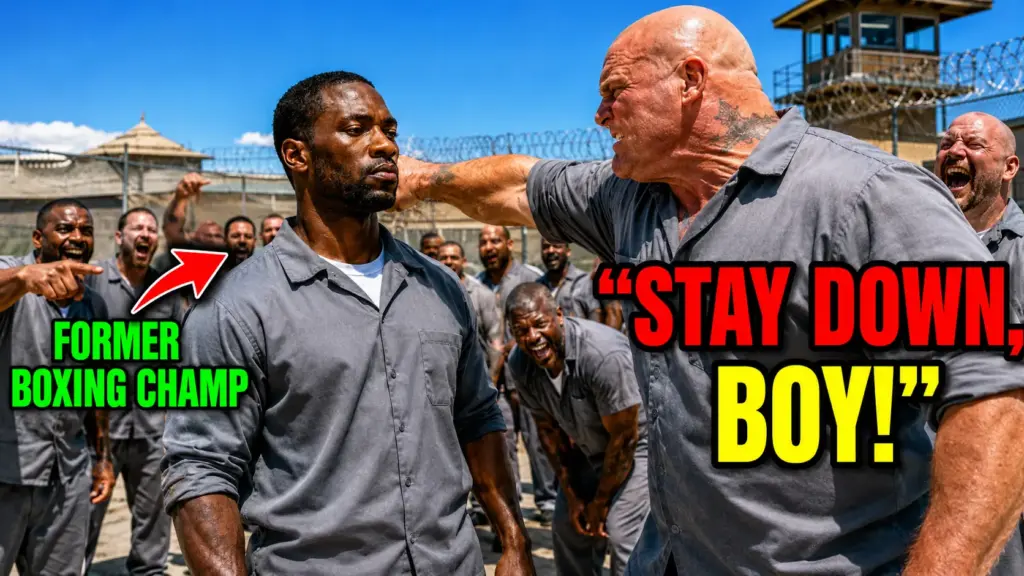
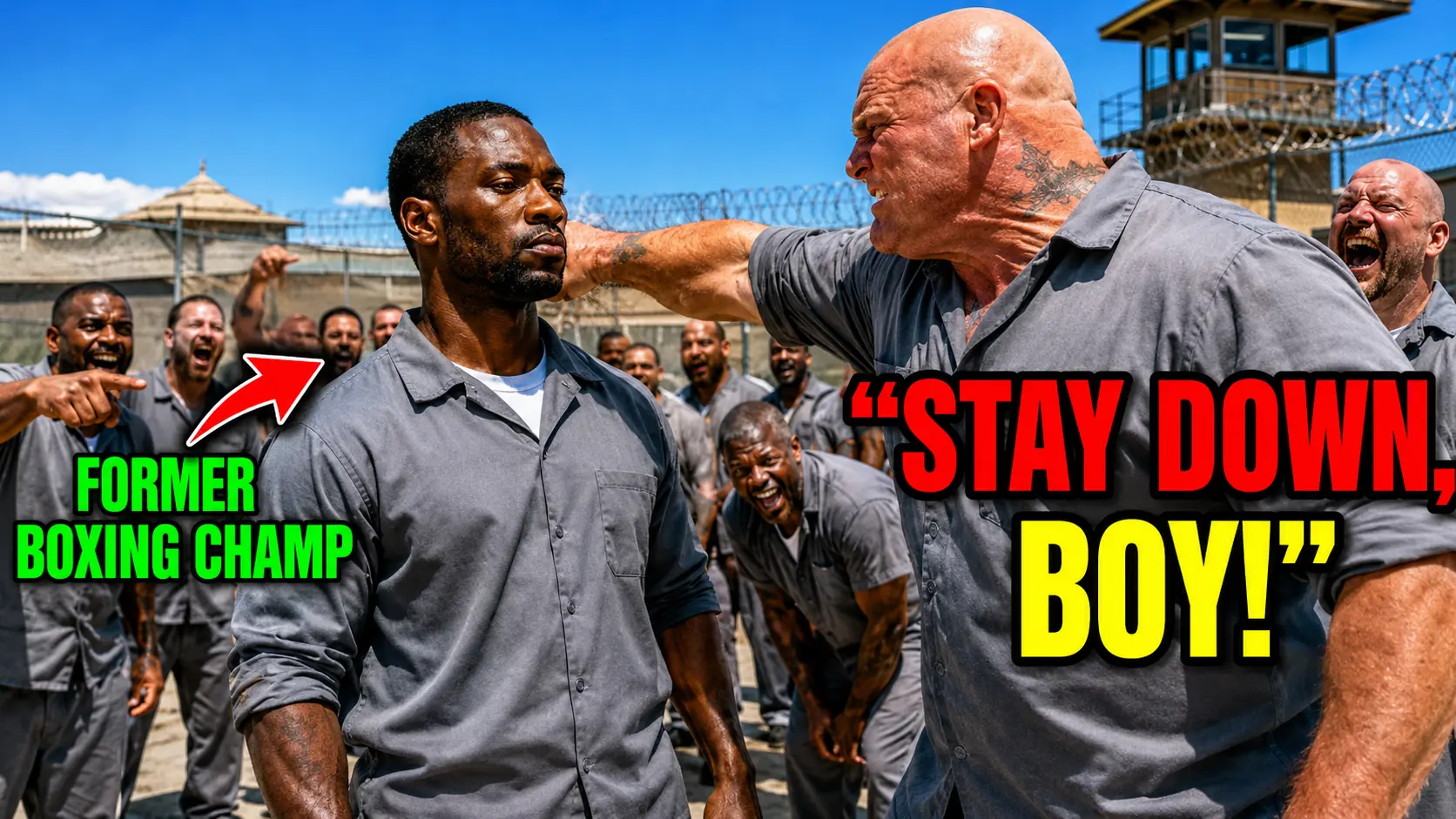
“New fish,” Wade Hartley said. “Smile for me.”
The slap cracked across the yard. Loud. Flat. Final. Fifty men went silent.
“Welcome to my house, boy.”
Blake’s head turned slow, back to center. He said nothing.
Hartley laughed.
“Nothing? No words? I like the quiet ones.” He leaned in. “Quiet ones break pretty.”
A guard watched from the rail, keys swinging. He looked away, slow, like he’d seen this a hundred times.
Blake stood still. Cheek burning. Pulse even. And under the sleeve of his gray uniform, his right hand curled closed—slow, certain—the way it used to before a bell.
The knuckles remembered. Each one had been wrapped in tape a thousand times. Each had ended fights faster than men could blink.
He breathed out. He let the fist open.
Not yet.
Ironwood State Correctional sat two hours past the last gas station, behind three fences and a river of razor wire. The walls held twelve hundred men. The yard smelled of iron, bleach, and old rain. Sound carried strange in there. A cough echoed. A whisper traveled. And everyone learned fast that silence was a kind of currency.
Blake Foster had been inside for nine days.
Before Ironwood, his name meant something. Lightweight champion of the state. Eighteen wins. Zero losses. Fourteen by knockout. Promoters flew in from two coasts. One slid a contract across a diner table with a number that had six figures and a private jet attached.
Blake read it twice. Then he folded it in half and pushed it back.
“My mother’s sick,” he said. “I’m not leaving.”
She had stage three. The treatments cost more than he made, so he took night shifts at a warehouse off Route 9. He trained at dawn, worked till dark, sat by her bed in between. He told himself the title could wait. Titles always wait. Mothers don’t.
Then came the robbery he didn’t commit.
A gas station two blocks from his gym got hit at midnight. The clerk described a tall Black man with a fighter’s build. Blake was tall. Blake was Black. Blake had a fighter’s build. The security tape was grainy. The lineup was rushed. And the public defender had forty other cases that month.
The jury took two hours. The judge gave him six years.
He never raised his voice. Not at the verdict. Not at his mother’s face in the gallery. He just looked at his hands—the ones that had ended fights in seconds—and made himself a promise.
In here, those hands stayed down. One swing, even a fair one, could add years. He would not give them that. He would do his time and go home to her.








