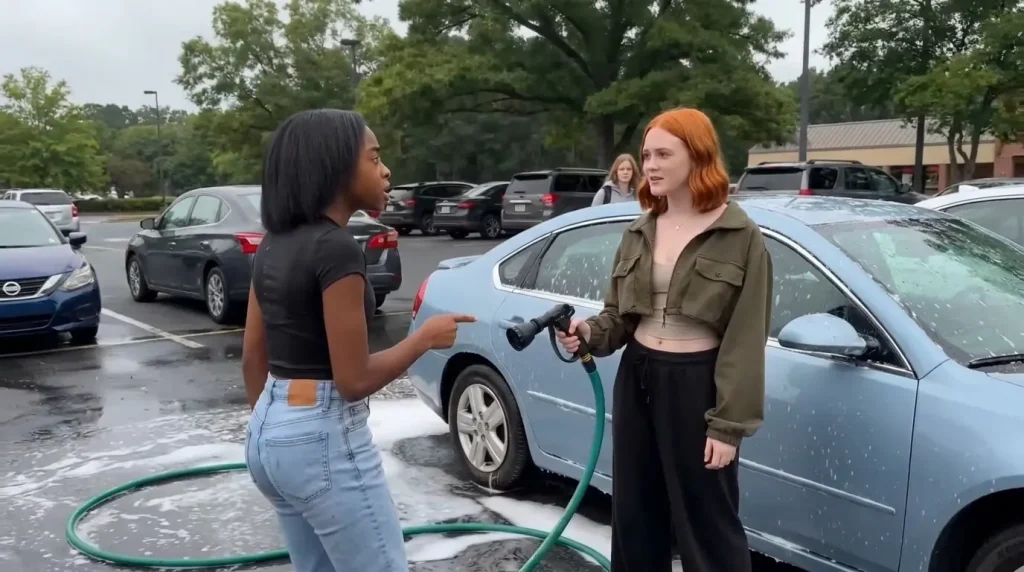
She Turned the Hose on the Black Girl — Then the Car Wash Went Quiet
Before the first bell of senior year had even rung, Kendra Hayes was already behind the science building with dirt beneath her fingernails.
She had volunteered to check on forty-eight tomato seedlings growing inside Brookstone High’s greenhouse because the environmental club adviser was recovering from surgery, and somebody needed to make sure three months of work did not die during the hottest week of September.
Kendra was seventeen, Black, with shoulder-length natural curls, warm brown skin, dark eyes, and the patient expression of someone who had learned that plants responded better to attention than most teenagers did.
She was halfway through replacing a broken irrigation tube when Sadie Rowland walked through the greenhouse door carrying a roll of Student Council posters.
Sadie stopped beside a tray of seedlings and looked at Kendra’s muddy hands.
“You really do collect every service hour this school offers.”
Kendra glanced up and explained that her required volunteer hours had been finished the previous spring. Sadie smiled as if Kendra had confirmed something anyway. “Right. Now it’s just for the college story.”
Kendra stared at her for a moment, then returned to the irrigation tube. “Or the tomatoes need water.” Sadie laughed, said Kendra was always serious before eight in the morning, and walked back toward the main building.
The conversation lasted less than a minute, yet it became the first moment Kendra would remember when adults later asked when things between them had changed.
Brookstone High sat in a comfortable Virginia suburb where brick neighborhoods spread between shopping centers, soccer fields, and office parks.
The school was public, well funded, and proud of its reputation for sending graduates to selective universities.
More than two thousand students attended, with enough racial and economic diversity for the district to feature Brookstone regularly in promotional materials. The diversity looked cleaner in brochures than it sometimes felt in hallways.
Kendra had attended Brookstone since freshman year. Her father, Wesley Hayes, managed commercial HVAC projects for a regional construction company, while her mother, Tonya Hayes, supervised patient scheduling at a large orthopedic clinic.
They owned a three-bedroom house twelve minutes from school, argued about utility bills, saved carefully for college, and spent too much money ordering food on Fridays when nobody wanted to cook.
Kendra had never thought of her family as either rich or poor until other people began trying to place them somewhere.








