Languages weren’t a hobby for Whitney. They were survival. Right now, she was 3 years into saving for a graduate program in linguistics, $11,000 short. Every shift at Harmon and Vine was another $200 closer. That’s who Gerald Covington just threw a wine list at.
A woman who’d been fluent in his blind spot her entire life. Gerald Covington didn’t get to $300 million by losing arguments in public. He got there by doubling down until the other person quit. So that’s exactly what he did. He pulled out his phone, tapped the screen three times, then slid it across the table toward Whitney, right through the puddle of condensation from his whiskey glass.
Read it. On the screen was a document. Dense Mandarin characters, small font. It was the preliminary term sheet for the waterfront deal, the actual investment contract between Gerald’s company and Mr. Shu’s firm. Read it out loud.
Translate it right now in front of everyone. He was betting on something specific. Conversational Mandarin and written business Chinese are completely different skills. You can chat with aunties at a fish market your whole life and still not be able to read a legal contract. He knew that.
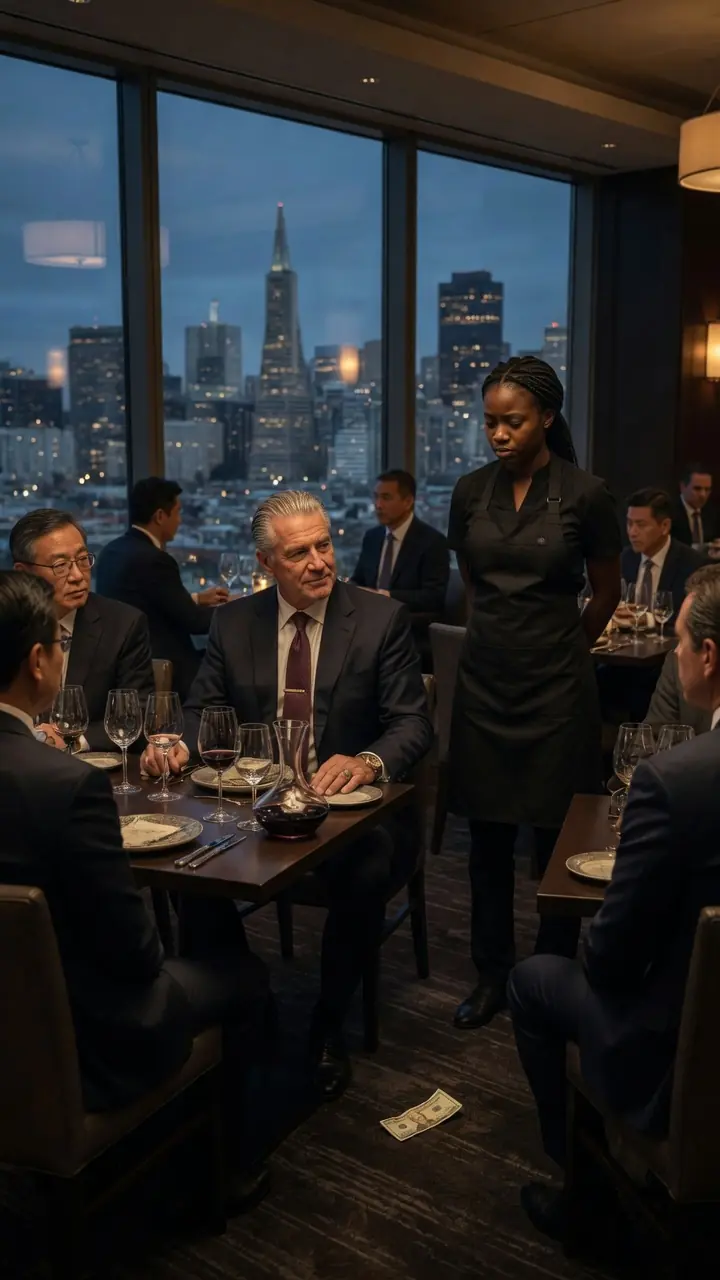
He was counting on it. Unless that’s above your pay grade, he added, which let’s be honest, everything at this table is. By now, the performance had an audience. The couple at the next table had stopped eating entirely. A woman by the window was holding her phone under the table.
Recording. Two servers stood frozen near the kitchen door, watching through the glass. Whitney picked up the phone. She didn’t grab it. She lifted it the way a surgeon lifts a scalpel with precision and zero hesitation.
Her eyes moved across the screen line by line, not frantically, not slowly, with the steady rhythm of someone who reads dense text the way most people read a menu. Then she started translating out loud in English, clear as glass. Clause one, equity stake percentages. She broke it down. Who owns what?
What triggers a dilution event. What the cap structure looks like. Clause two, liability limitations. She translated the sub clauses, flagged the mutual indemnity language, and noted that the English equivalent would typically use the phrase hold harmless, which wasn’t reflected in Gerald’s English draft. Then she hit clause three.
She stopped. This non-compete provision, she said, still looking at the screen. The phrasing here is ambiguous. In standard Mandarin legal writing, this could mean the non-compete applies to subsidiaries only. But in Shanghai regional convention, this same phrasing extends to individual officers.
Your English draft treats it as subsidiaries only. That’s a gap. And depending on which interpretation the court applies, it could cost you the entire exclusivity clause. She set the phone down, looked at Gerald, waited. The entire table looked at Mr. Shu.








