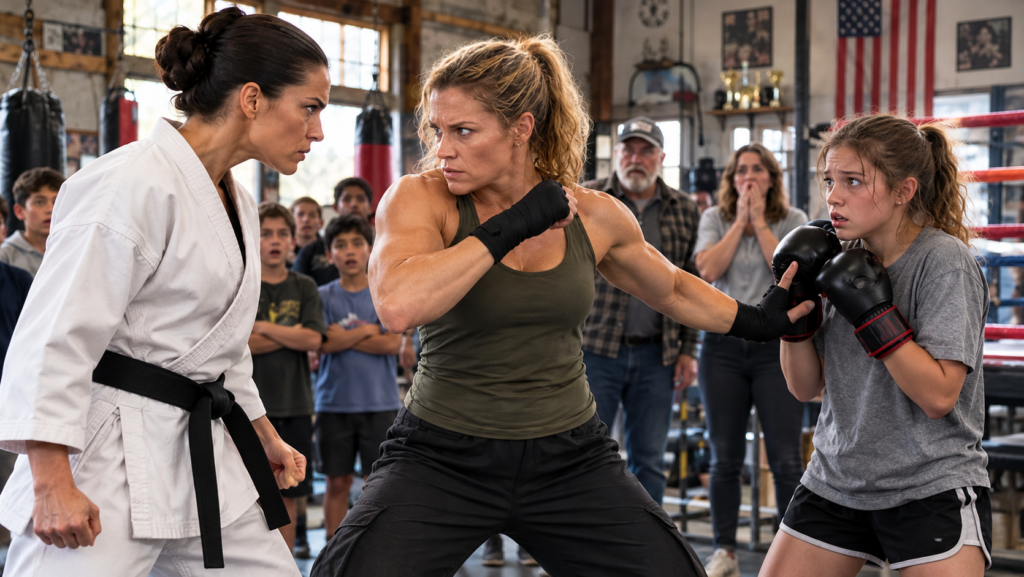
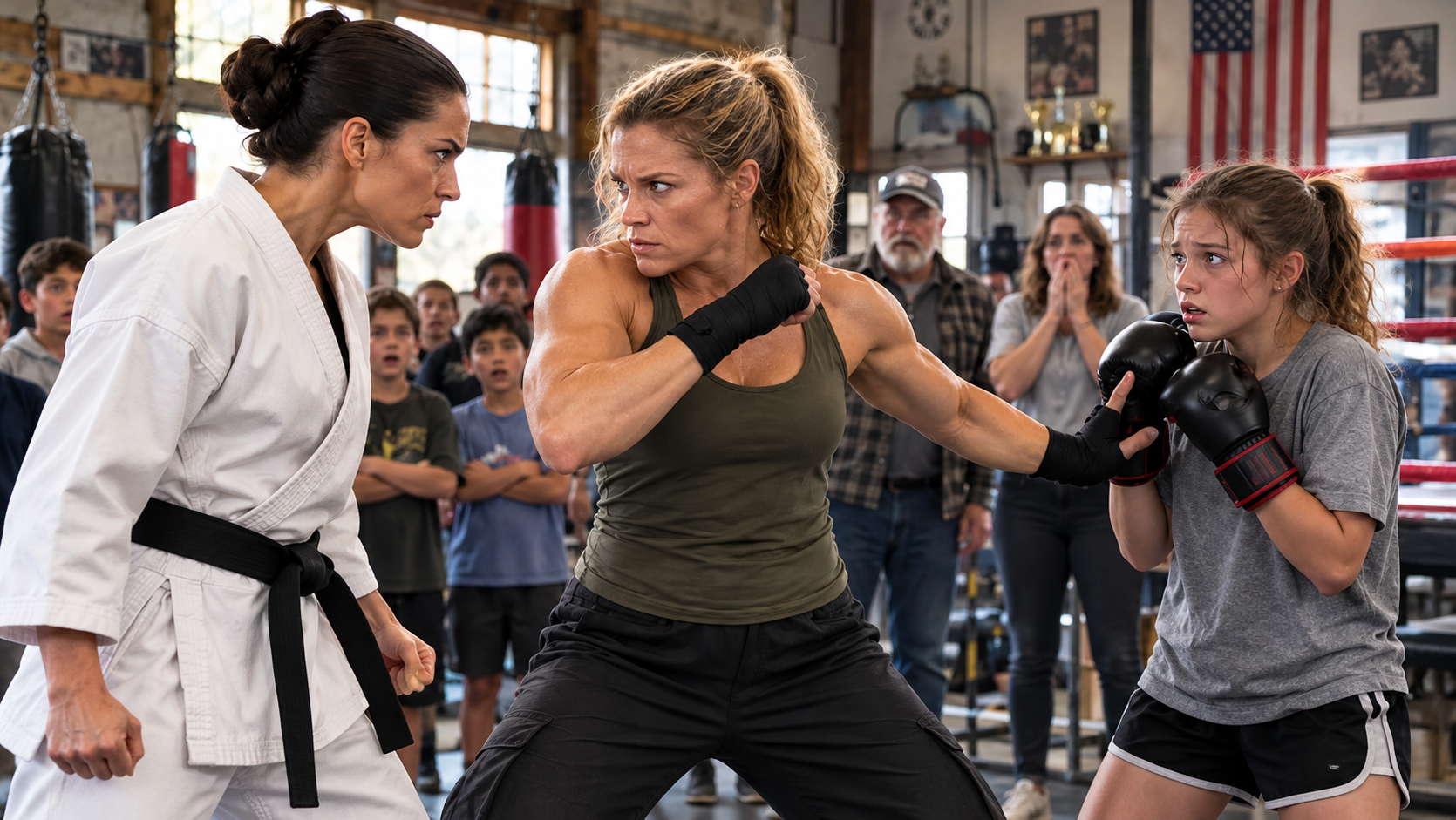
Jiselle Klein came to take a children’s gym and left on one knee, staring at the woman she had called finished. Holly Granger had spent years keeping the Mill Creek Youth Gym alive with patched gloves, failing heat, and her own unpaid hours. When Jiselle shoved 12-year-old Ben, Holly stepped between them. She hadn’t fought in years. But as the black belt swung, the retired boxer found her stance, and the whole room discovered what Holly was still capable of.
The Mill Creek Youth Gym was a drafty room above a shuttered feed store, held together by patched bags, borrowed time, and Holly’s unpaid work. Each morning, she swept the cracked floor, repaired gloves, and taught kids like Ben how to wrap their hands, steady their breathing, and walk away from trouble. For them, the gym was more than a place to train. It was one place in town where someone expected them to show up. But the furnace kept failing, the bills kept growing, and the gym’s future rested on a lease Holly could not afford to lose.
Then Jiselle arrived with a black belt, a polished contract, and a deadline. Clear the room by week’s end. Holly asked her to wait for the town board. Jiselle laughed. Before long, every child in the gym would have to decide whether to leave quietly or stand beside Holly and find out what that contract really meant. The first thing Holly did after Jiselle left was check the furnace. It had stopped again. The room above the old feed store was cold enough that the children’s breath showed faintly in the air and the wind worried at the window frames. Holly crouched beside the heater, tapped the metal casing, and listened. Nothing. Behind her, the trainees waited on the mats, coats still on, hand wraps dangling from their wrists.
“Give it a minute,” she said. She had learned to say that about more than the furnace. The gym had started with little more than a key, a stack of donated gloves, and a promise to keep the doors open. Holly had once fought for purses and rankings. Now she spent mornings tightening loose bolts, stitching torn leather, and sweeping grit off the floor before the kids arrived. There was no staff, no steady funding, and no warm place waiting if this one closed. For Ben, the youngest regular, showing up had become part of his week. He was 12, narrow-shouldered, and still learning that a punch began in the feet. Holly never told him to fight harder. She told him to breathe, keep his hands up, and pay attention to the space around him. If someone tried to draw him into trouble, she said leaving was a skill too.








