UNDER HER FATHER’S ROOF
A story of a wedding, a public lake, and the woman nobody bothered to recognize.
Prologue: Four Minutes
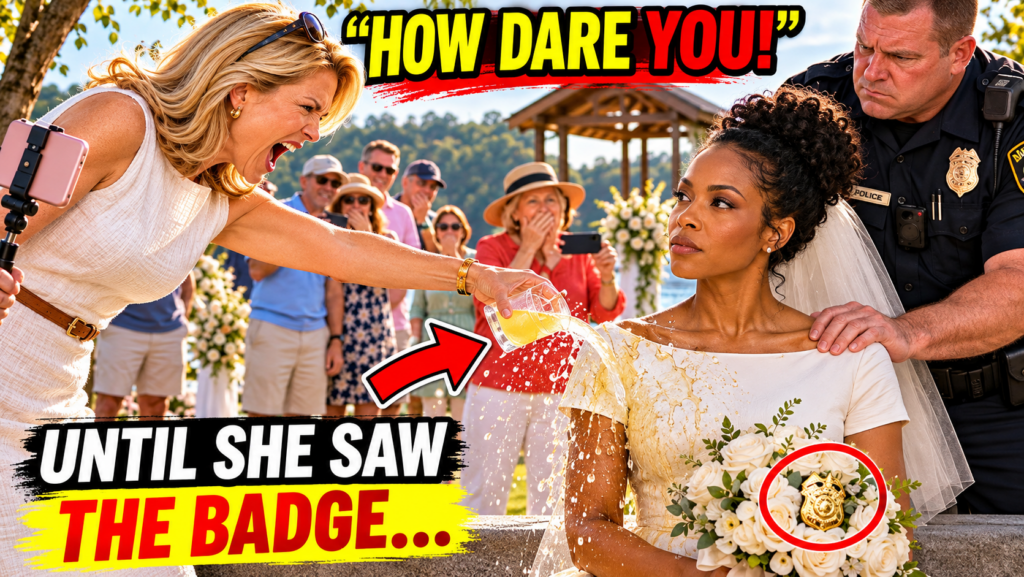
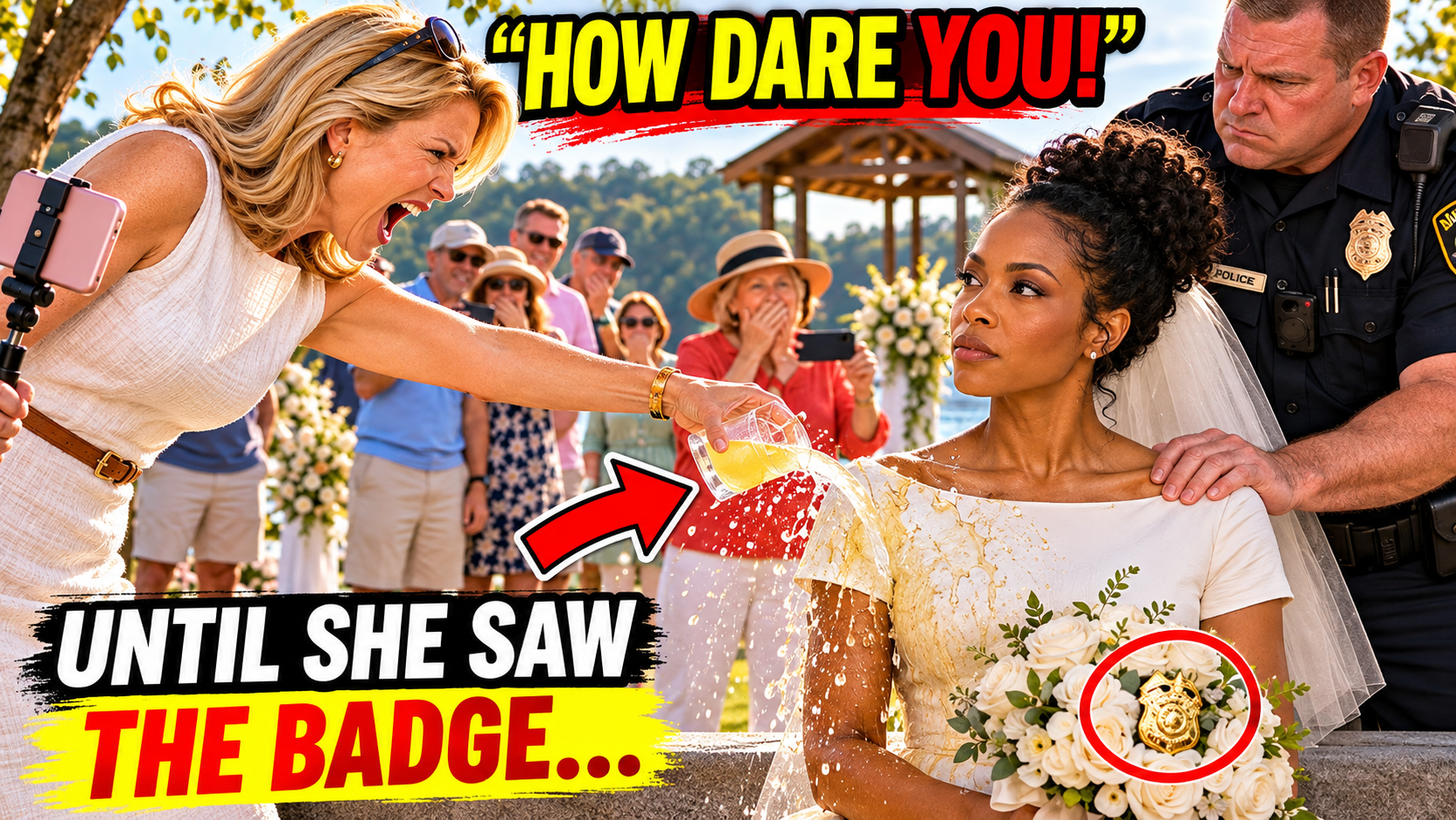
Four minutes before five o’clock, the bride sat on a concrete bench with sand caught in the hem of her white dress and her hands clenched tight beneath its pearl-trimmed sleeves.
Her brother Quentin was beside her, one hand still cuffed to the steel picnic-table frame. The officer who had put him there stood a few yards away pretending not to hear him breathe. At the bottom of the hill, a cluster of guests watched an older woman with a phone narrate their humiliation to an audience of strangers.
“Neighbors, look,” Candace Wadsworth said, turning the phone to include the bride. “The help dressed up for the occasion. Isn’t that something?”
The woman in white did not answer.
Candace moved closer. She had the pink face of someone who had spent too long in the sun and too many years being agreed with. Beyond her shoulder, Harrow Lake shimmered between the reeds. A line of folding chairs blocked the aisle where the bride had planned to walk. Some had been stacked sideways. Others had been dragged into a barricade. The flowers were scattered. Someone had nearly knocked a framed photograph of a smiling man in a work shirt off its table.
“You heard Officer Burnham,” Candace continued. “One more step and this wedding ends right here. I called the police, and you’re still sitting on my lake like you own it.”
“The lake isn’t yours,” the bride said quietly.
“It will be ours again in four minutes.”
The bride glanced at the clock on the church bus parked near the gravel turnout. It had not moved fast enough all afternoon. Now its red digits seemed to leap.
Her mother stood near the boathouse with a safety pin between her lips, holding herself back from saying the things every line on her face said for her. The groom, a history teacher named Rowan, had stopped arguing. He was helping a seventy-year-old guest retrieve a dropped handbag. It was what he did when there was nothing useful left to argue about: he made sure someone was comfortable.
From somewhere beyond the oak-lined road came a low engine noise, not a siren, not yet distinct enough to identify. The bride heard it. She looked toward the bend in the road, and for the first time in an hour, the tension in her jaw softened.
Candace mistook the expression for surrender.
“Good,” she said. “Now you’re beginning to understand.”
The bride touched the tiny pearl sewn at the edge of her sleeve. Her father had bought the pearls long ago, when he could scarcely afford them. She had promised herself that she would not use her badge today, that she would not turn her wedding into a lesson in authority. She had kept that promise longer than anyone should have been asked to.
The sound of the engine grew closer.
And the last four minutes of Candace Wadsworth’s certainty began to run out.
PART ONE: THE ROOF
Chapter 1: The Man Who Built It
When Bethany Tisdale was ten, her father taught her to hold a carpenter’s level without looking at the bubble.
“First, tell me what you think is straight,” Hiram Tisdale said. “Then look and find out whether you’re right.”
They were standing beside the lake in the summer of 1998, with fresh pine boards stacked under a canvas tarp and sawdust caught in every fold of Hiram’s work pants. The structure around them was only a frame then: six posts sunk into square concrete footings, crossbeams laid across the top, the beginning of a roof that would shelter people Hiram had never met.








