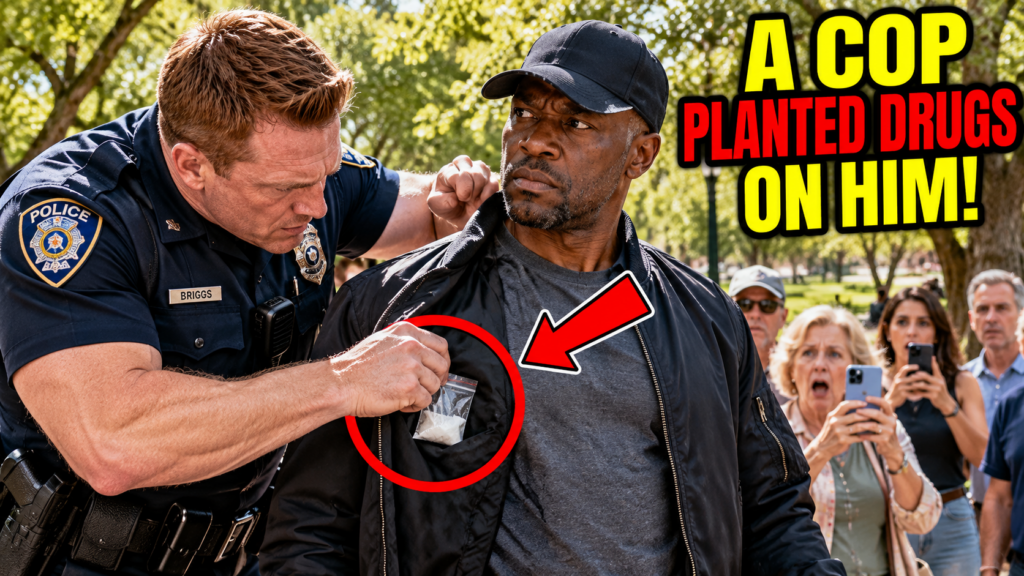
Over the next four days, Marcus stopped appearing on television.
He stopped giving interviews.
Publicly, he allowed everyone to believe the state was investigating one corrupt officer.
Privately, he followed the money.
Northstar Protective Services had received $18 million in emergency-security contracts over three years.
On paper, the company provided guards, vehicles, communications equipment, and temporary security fencing during floods, tornadoes, and civil emergencies.
Marcus checked deployment records.
Something did not match.
During a major flood the previous spring, Northstar billed the state for 146 security guards.
Only seventy-eight had actually been deployed.
The rest existed on invoices.
During another emergency, the company billed for twelve armored vehicles.
Marcus found records for seven.
Millions had gone somewhere.
Then came the link to the police department.
Northstar’s local subcontractor was owned by Deputy Chief Foster’s brother-in-law.
Officer Briggs worked private security shifts for the same subcontractor.
Chief Keller had accepted paid travel to three conferences sponsored by Northstar.
None of that proved a crime.
Together, it looked terrible.
Marcus asked state auditors for five years of records.
Two hours later, someone broke into Leonard Price’s apartment.
Nothing valuable was taken.
Only Leonard’s folder containing copies of his grandson’s arrest documents.
Leonard called Marcus.
“They’re cleaning something.”
Marcus agreed.
“Get out of the apartment.”
“General, I’m seventy-six years old.”
“That’s not a reason to stay where somebody has already broken in.”
Leonard laughed softly.
“You sound like my daughter.”
“Your daughter sounds intelligent.”
Leonard became serious.
“Did my letter cause all this?”
“No.”
Marcus looked at the growing collection of files on his desk.
“Your letter revealed it.”
There was a difference.
That evening, Officer Evan Miller, one of the two policemen who had pointed his gun at Marcus in the park, requested a private meeting.
He chose an old diner forty miles away.
Marcus arrived alone.
Miller was already in a booth.
He looked exhausted.
“I’ve been a cop nine years,” he said.
Marcus sat opposite him.
“I know.”
“I’ve never reported another officer.”
Marcus waited.
Miller rubbed both hands together.
“Briggs used to joke about the park.”
“What kind of jokes?”
“He called it the ATM.”
Marcus felt something settle in his stomach.
“Why?”
“I thought he meant easy arrests.”
“You don’t anymore.”
Miller shook his head.
People arrested by Briggs sometimes carried cash.
That cash went through property intake.
Then, according to Miller, amounts changed.
Eight hundred dollars became three hundred.
Five hundred became one hundred sixty.
Most suspects never fought it.
They were afraid.
Some were embarrassed.
Others assumed lawyers would cost more than the missing money.
Marcus asked the obvious question.
“Who controlled property intake?”
Miller answered.
“Deputy Chief Foster.”
Marcus leaned back.








